Mastering Foot Traffic: Flow, Bottlenecks, and Experiential Design at Events | Million Dollar Events Podcast
In the world of live events, it’s not just what attendees see—it’s how they move. Whether you’re producing a high-ticket retreat, a 1,000 person conference, or an intimate mastermind weekend, your experiential design directly impacts their experience, engagement, and perception of luxury or professionalism.
Let’s break down three core principles that elevate your event from functional to unforgettable: foot traffic strategy, bottleneck prevention, and experiential design.
1. Foot Traffic Strategy: Choreographing Movement with Intention
Every event has a natural rhythm, and foot traffic is its pulse. Where attendees arrive, how they explore, and where they pause should all feel intuitive. Great experiential design means:
Guided Flow: Clear directional signage, ambient lighting, or floor decals can subtly guide attendees from check-in to key areas (vendors, lounges, activations).
Zoning: Separate the space into functional zones—think: networking, shopping, content, food—so attendees naturally circulate rather than cluster.
Anchoring Key Features: Place your most engaging or high-traffic elements (photo ops, VIP areas, keynote stage) in strategic locations to draw people deeper into the venue.
Pro tip: Observe how people move in the first hour of your event and adjust the spacing and signage in-real-time.

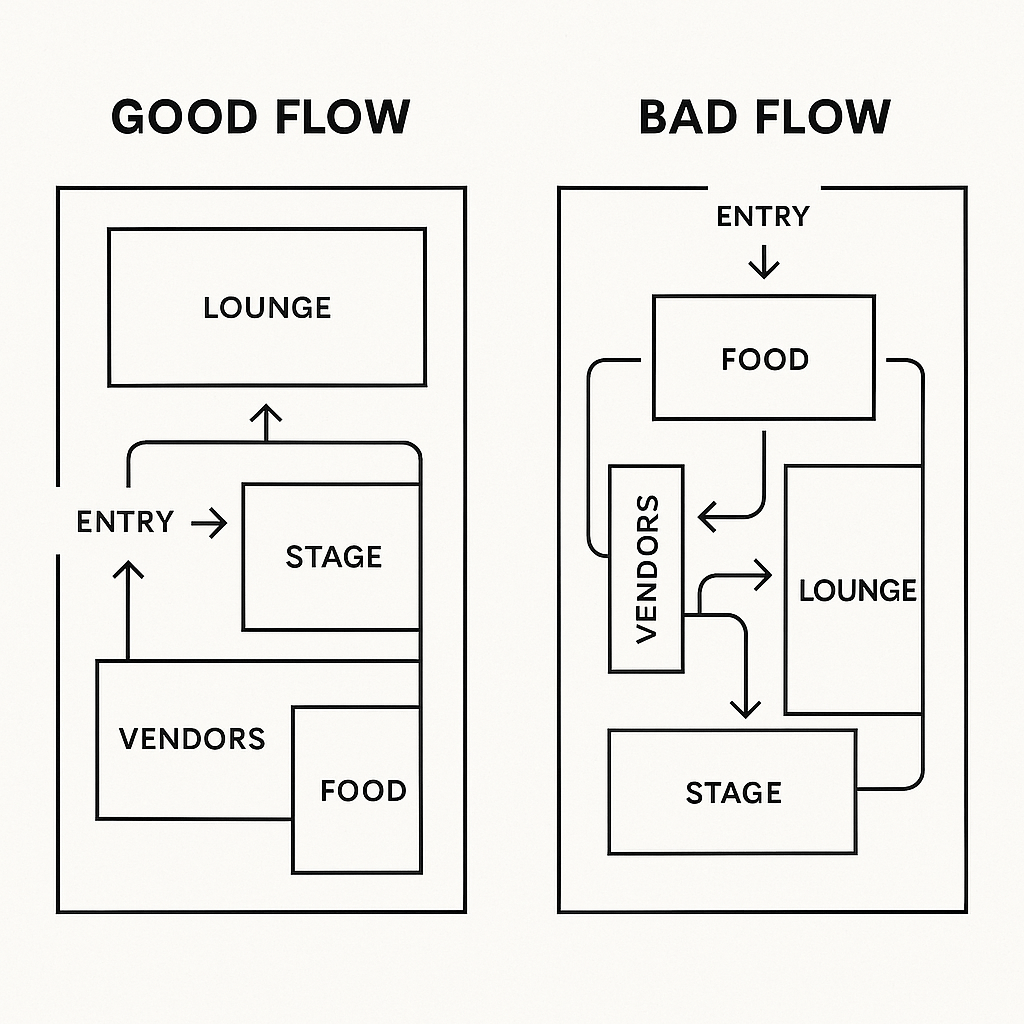
2. Bottlenecks: The Hidden Killer of Guest Experience
There’s nothing high-vibe about long lines (cough cough ladies bathrooms and breakfast buffets) or congested entryways especially around the registration area. Bottlenecks can form for many reasons—understaffed check-in, tight corridors, poor layout—and they kill the vibe fast.
Here’s how to design bottleneck-proof events:
Stagger Arrivals: Use timed check-ins, early access, or tiered VIP arrivals to spread out flow.
Overestimate Space Needs: Hallways, doorways, and lounges should allow for double the expected capacity to accommodate comfort.
Disperse High-Demand Elements: Avoid placing coffee bars, swag tables, and selfie stations next to each other. Space them out to prevent clustering.
Quick fix: Always do a pre-conference walkthrough (also known as a “precon”) as an attendee—simulate moving from one area to another and notice where friction occurs in your experiential design.
3. Experiential Design: Turning Flow into Feeling
Experiential design is where strategy meets storytelling. It’s not just about logistics—it’s about how people feel as they navigate your event.
Sensory Touchpoints: Use soundscapes, scent branding, and lighting to mark transitions between event zones (e.g., a warm citrus scent in the welcome area, calming music in the lounge).
Emotional Arcs: Design your layout to mirror your event’s emotional journey—energizing at the entrance, focused near sessions, and relaxing in the exit zone.
Instagrammable Interactions: Include post-worthy backdrops, interactive installations, and personalized touches (like handwritten name cards) to turn space into memory.
Bonus Tip: Think of your event like a well-designed retail store—people should feel guided, intrigued, and at ease at every step.
Final Thoughts
The best events feel effortless—but behind the scenes, they’re engineered with intention. Understanding how foot traffic, bottlenecks, and experiential design intersect allows you to create events that don’t just look good—they flow beautifully and leave lasting impressions.
Whether you’re planning a luxury retreat in Thailand or a 500-person business summit, remember:
every square foot tells a story. Make it one they’ll never forget.